English
04. Exhibition pavilion for temporary art exhibitions. The design of the ephemeral, the essence of imagination.
In a 1927 letter, an American writer notes that fear is a rational response when we confront the unfathomable, what escapes logic and science. In essence, he saw fear not as a weakness, but as a source of imagination. (H.P. Lovecraft – Selected Letters II: 1925–1929, edited by August Derleth & Donald Wandrei, Arkham House, 1968) & (The Call of Cthulhu, 1928).
Italiano
04. Padiglione espositivo per mostre d’arte temporanee. Il design dell’effimero, l’essenza dell’immaginazione.
In una lettera del 1927, uno scrittore americano scrive che la paura è una risposta razionale quando ci si confronta con l’insondabile, con ciò che sfugge alla logica e alla scienza. In sostanza considerava la paura non come debolezza, ma come fonte di immaginazione. (H.P. Lovecraft - Selected Letters II: 1925-1929 a cura di August Derleth & Donald Wandrei, Arkham House, 1968) & (The Call of Cthulhu, 1928).
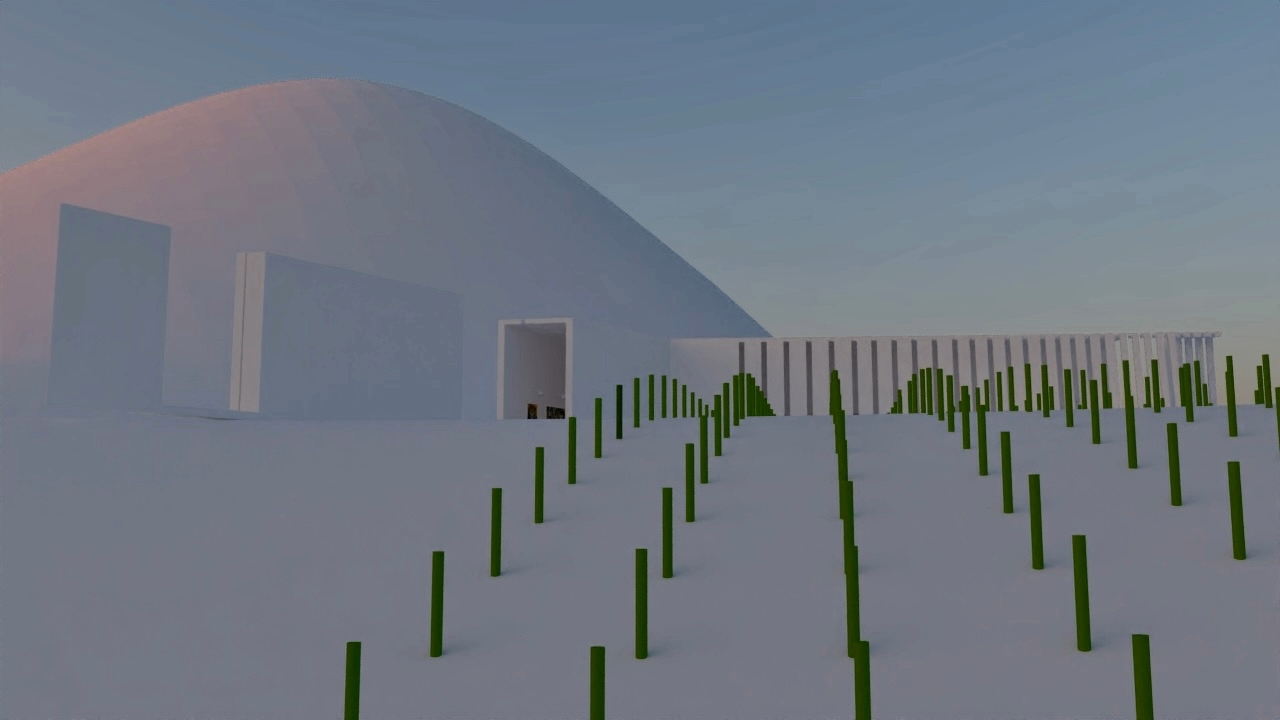
– pavilion, case study in V-Ray –
In this article, I wanted to evoke an element that defines us as architects: imagination. Starting from that very word, I designed a case study of an exhibition pavilion, which I also chose to include in my portfolio. “The Pavilion as a Manifesto of Creative Freedom” — a permanent architectural element that leaves behind rarefied emotions for those who visit it. The idea was to create a space capable of hosting and showcasing temporary exhibitions by artists, photographers, sculptors, architects, and designers. A triangulation emerges between the architectural form, the artistic expression, and the visitor: the first acts as a container, welcoming through its geometric forms and its play of light and shadow; the second expresses itself freely through different artistic languages; and the last is enveloped by both, carrying with them a fusion of emotions shaped by what they see — the envelope and the content within it. I imagined an element that mediates between a vineyard descending into the valley and a forest rising on one side, with lavender whose violet hue contributes to a mysterious atmosphere, creating a contrast with grey and brown tones. The dominant elements are exposed reinforced concrete and the imposing reinforced wooden pillars. The pavilion’s very structure becomes a design statement: through its geometric forms, it seeks to create a sharp and deliberate threshold between forest and vineyard, between nature and architecture, between interior and exterior, between light and shadow, between art and the visitor.
In questo articolo ho voluto evocare un elemento che contraddistingue noi architetti, l' immaginazione. Proprio da quest'ultima parola, ho voluto progettare un caso studio di un padiglione espositivo che ho voluto anche inserire nel mio portfolio. "Il Padiglione come manifesto di libertà creativa", un elemento architettonico permanente ma che lascia emozioni rarefatte per chi lo visita. Con l'idea di inserire al suo interno e poter mostrare a tutti, mostre temporanee di artisti, fotografi, scultori, architetti e designer. Creando una triangolazione tra la forma architettonica, l'espressione artistica ed il visitatore, il primo come contenitore che con le sue forme geometriche ed il gioco di luci ed ombre accoglie, il secondo come espressione della sua arte in varie forme che lascia libero sfogo all'artista e l'ultimo che viene avvolto da entrambi lasciando dietro di se un connubio di emozioni connesse a ciò che vede, ossia l'involucro ed il contenuto in esso. Ho immaginato un elemento di integrazione tra una vigna che scende a valle ed un bosco che si innalza da un lato, lavanda che con il suo colore viola contribuisce a creare un effetto misterioso, un elemento di contrasto con il grigio e marrone. Gli elementi predominanti sono il cemento armato a faccia vista e gli imponenti pilastri in legno armato, la struttura stessa del padiglione è un elemento di design, con le sue forme geometriche che vuole dare un taglio netto e deciso tra bosco e vigna, tra natura e architettura, tra interno ed esterno, tra luce ed ombra, tra arte e visitatore.
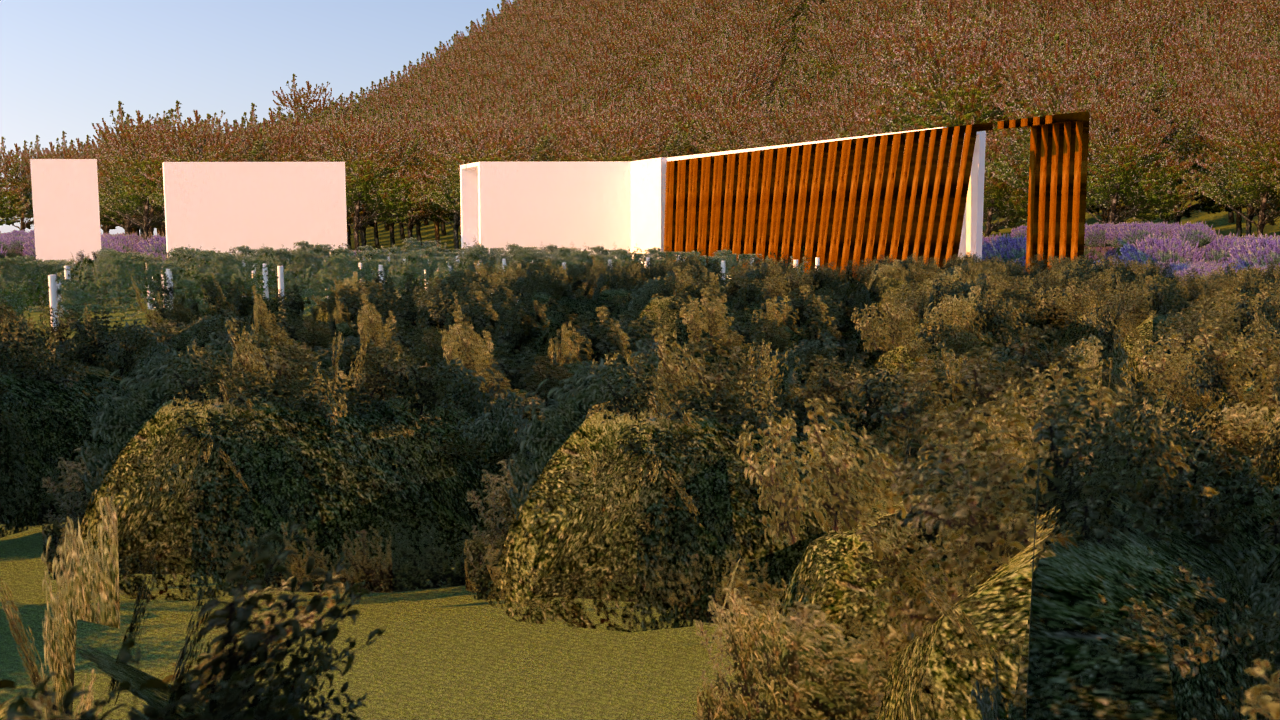
– pavilion, case study in SketchUp –
The design idea was born, yes, from my imagination — but behind it lies continuous and constant research: readings, documentaries, insights drawn from the work of architects, designers, and engineers. Any idea, once put into action, can become interesting because it leads you into a continuous exercise: encountering new obstacles and understanding how to face them, whether through hand‑drawing or on a computer, through the choice of materials, or through the context in which the project will be built. All of this sparks curiosity. In essence, only those who feel fear can truly imagine (H.P. Lovecraft).
L'idea progettuale è venuta si, dalla mia immaginazione, ma dietro c'è una continua e costante ricerca, letture, visione di documentari, spunto da altri progetti di architetti, designer e ingegneri. Qualunque idea se messa in atto può risultare interessante, perché ti porta ad un continuo esercizio, trovare nuovi ostacoli e capire come affrontarli, che siano nel disegno manuale o sul pc, sulla tipologia del materiale da utilizzare, sul contesto cui realizzarlo, tutto questo evoca curiosità! In sostanza, solo chi ha paura può davvero immaginare (H.P. Lovecraft).
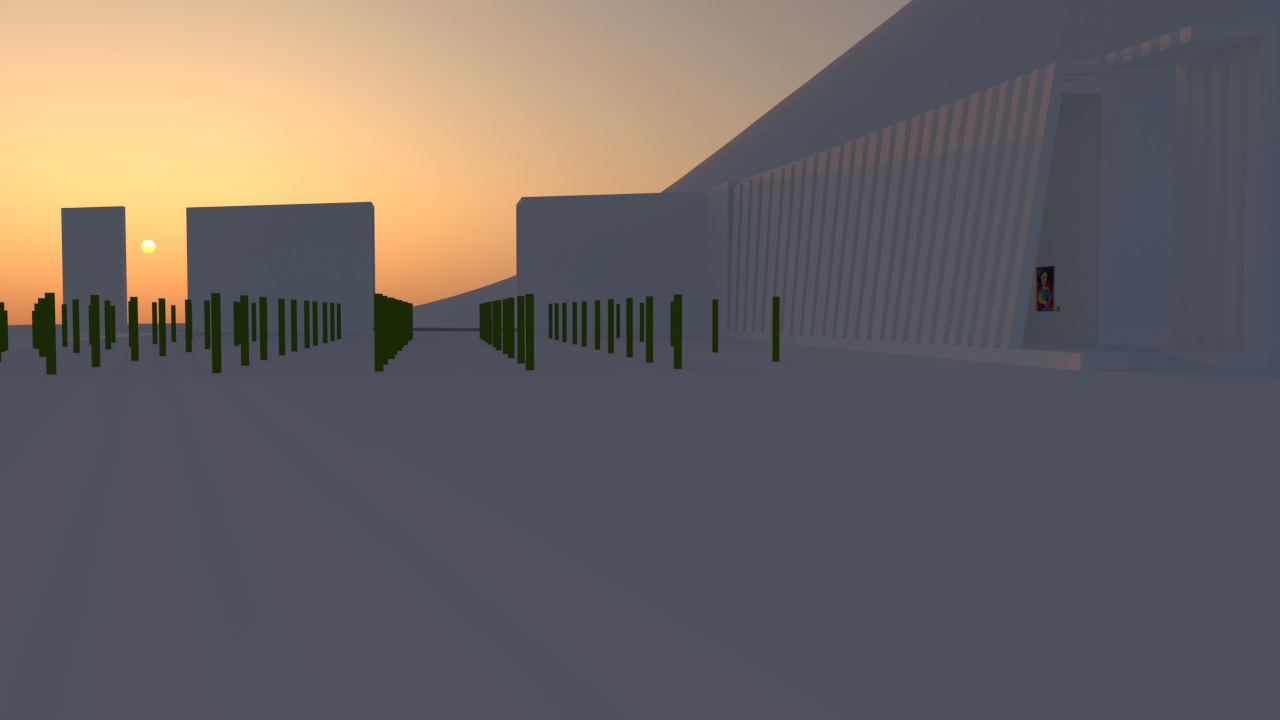
– the darkness is getting closer –
I appreciate you reading "Exhibition pavilion for temporary art exhibitions. The design of the ephemeral, the essence of imagination" and feel free to contact me if you want to share your thoughts.
Grazie per aver letto "Padiglione espositivo per mostre d’arte temporanee. Il design dell’effimero, l’essenza dell’immaginazione", mi contatti pure se vuole condividere la sua opinione.