
English
03. Ettore Sottsass, the master behind the scenes.
If I were “infected” by the Sottsass syndrome? Good, because it’s a precious symptom, one that reveals an endless curiosity about everything. Speaking about Ettore Sottsass means crossing one of the most free and visionary paths of the twentieth century. Architect by training, artist by vocation, and designer by necessity and passion, Sottsass always rejected labels, choosing instead to move between disciplines as if in a continuous dialogue. The son of a rationalist architect, Sottsass graduated from the Politecnico di Torino in 1939. But he soon distanced himself from functionalist rigor: for him, architecture was never just construction, but a space of life, emotion, and ritual. His 1961 journey to India marked a turning point: he discovered an architecture made of symbols, colors, spirituality, and essentiality — an experience that led him to conceive space as a living organism, capable of welcoming and transforming those who inhabit it. In his projects — from interiors to residential buildings — this tension between form and meaning, between material and human dimension, is always present.
Italiano
03. Ettore Sottsass, il maestro dietro le quinte.
Se fossi contagiato dalla sindrome di Sottsass? bene! perchè è un sintomo prezioso per una infinitesima curiosità del tutto. Parlare di Ettore Sottsass significa attraversare uno dei percorsi più liberi e visionari del Novecento. Architetto di formazione, artista per vocazione e designer per necessità e passione, Sottsass ha sempre rifiutato le etichette, scegliendo invece di muoversi tra discipline come in un dialogo continuo. Figlio di un architetto razionalista, Sottsass si laurea al Politecnico di Torino nel 1939. Ben presto, però, prende le distanze dal rigore funzionalista: per lui l’architettura non è mai solo costruzione, ma spazio di vita, emozione e rito. Il viaggio in India del 1961 segna una svolta: scopre un’architettura fatta di simboli, colori, spiritualità ed essenzialismo, che lo porta a concepire lo spazio come organismo vivo, capace di accogliere e trasformare chi lo abita. Nei suoi progetti – dagli interni agli edifici residenziali – emerge sempre questa tensione tra forma e significato, tra materia e dimensione umana.

– Olivetti Valentine Typewriter, 1968 –
Alongside architecture, Sottsass cultivated a deep relationship with art. In the 1940s he joined the Movimento Arte Concreta, experimenting with painting and visual languages. His research expanded into photography and writing — tools through which he reflected on the meaning of design. Design soon became his privileged field: starting in 1958, during his years with Olivetti, he created typewriters and calculators that became icons, such as the Valentine (1969). These were not mere instruments, but cultural objects — colorful, democratic, and expressive. In the 1960s, with Poltronova, he designed radical furniture like the Superbox, totemic cabinets that transformed everyday life into an aesthetic experience. And in 1981 he founded the Memphis collective with Michele De Lucchi, Andrea Branzi, and others: a laboratory of formal freedom, irony, and color that broke decisively with the dominant minimalism. The Carlton bookcase became the manifesto of this revolution. For Sottsass, designing never meant simply solving functions, but giving meaning to people’s lives. His work invites us to see architecture and design as languages capable of moving, questioning, and narrating. Light and color become poetic tools — and at the same time technical details. In this sense, his thinking approaches a nearly Goethean vision of design: form is never neutral, but arises from the encounter between rationality and imagination, between light and shadow, between space and life. Ettore Sottsass taught us that architecture, art, and design are not separate worlds, but parts of a single cultural discourse — one that does not merely produce objects or buildings, but constructs meaning. His work remains a reference for those who, like us architects and designers, seek to give form not only to spaces, but to experiences.
Accanto all’architettura, Sottsass coltiva un rapporto profondo con l’arte. Negli anni Quaranta aderisce al Movimento Arte Concreta, sperimentando pittura e linguaggi visivi. La sua ricerca si estende alla fotografia e alla scrittura, strumenti con cui riflette sul senso del progetto. Il design diventa presto il suo campo privilegiato: con Olivetti, a partire dal 1958, progetta macchine da scrivere e calcolatori che diventano icone, come la Valentine (1969). Non semplici strumenti, ma oggetti culturali, colorati e democratici. Negli anni Sessanta, con Poltronova, crea mobili radicali come i Superbox, armadi totemici che trasformano il quotidiano in esperienza estetica. E nel 1981 fonda il collettivo Memphis, insieme a Michele De Lucchi, Andrea Branzi e altri: un laboratorio di libertà formale, ironia e colore, che segna una rottura con il minimalismo dominante. La libreria Carlton diventa manifesto di questa rivoluzione. Per Sottsass, progettare non significava mai solo risolvere funzioni, ma dare senso alla vita delle persone. La sua opera è un invito a considerare architettura e design come linguaggi capaci di emozionare, criticare, raccontare. La luce ed il colore diventano strumenti poetici ed allo stesso modo dettagli tecnici. In questo, il suo pensiero si avvicina a una visione quasi goethiana della progettazione: la forma non è mai neutra, ma nasce dall’incontro tra razionalità e immaginazione, tra luce e ombra, tra spazio e vita. Ettore Sottsass ci ha insegnato che architettura, arte e design non sono mondi separati, ma parti di un unico discorso culturale. Un discorso che non si limita a produrre oggetti o edifici, ma che costruisce significati. Il suo lavoro rimane un riferimento per chi, come noi architetti e designer, cerca di dare forma non solo a spazi, ma a esperienze.
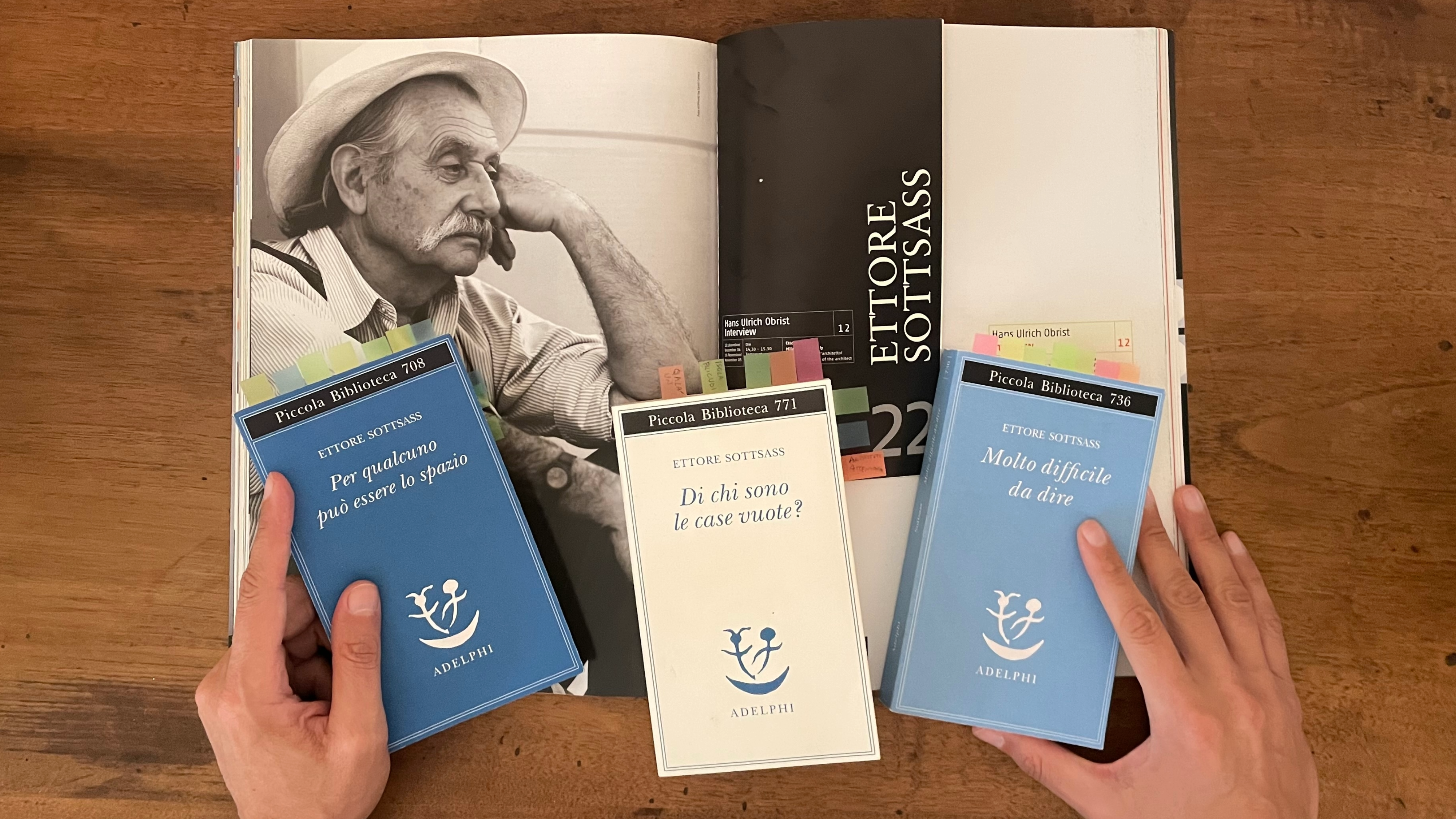
– Books –
I almost forgot to mention why I chose this title: “The Maestro Behind the Scenes.” In one of his books, Sottsass jokes: “They made me become an artist, otherwise they wouldn’t pay me. Someone — maybe to tease me, or maybe because they truly believe it — calls me Maestro.” From everything I’ve read in his books, and even more from what I’ve tried to interpret in his stories and listen to in his interviews, it’s clear that he never liked labels — architect, designer, or, least of all, maestro. That’s where the addition “behind the scenes” comes from. The Master Behind the Scenes remains, to this day, a source of inspiration — not only as a professional, but equally as a person. Self‑critical, curious, nonconformist, reserved, rebellious in thought… and I could go on. In fact, I could add many more adjectives. A pity to stop here — but I’ll end this article like this. My exploration of Sottsass is far from over: I will keep reading his books, revisiting his drawings, concepts, and photographs, and discovering new documents, publications, exhibitions, and much more.
Quasi dimenticavo di scriverlo, perché ho scelto questo titolo: “Il maestro dietro le quinte”? In uno dei suoi libri, Sottsass ironizza dicendo: "mi hanno fatto diventare un artista, altrimenti non mi pagano. Qualcuno forse per prendermi in giro o forse ci crede veramente, mi chiama Maestro". Da tutto quello che ho potuto leggere nei suoi libri, ancor meglio cercare di interpretare dai suoi racconti ed ascoltare nelle sue interviste, non gli sono mai piaciute le etichette, come architetto, designer o tanto meno maestro. Da qui, l’aggiunta di “dietro le quinte”. Il maestro dietro le quinte, tutt’oggi è fonte di ispirazione non solo come professionista ma alla pari anche come persona. Autocritico, curioso, anticonformista, riservato, ribelle d’idee, e non so se aggiungere altro, anzi potrei aggiungere tanti altri aggettivi su di lui. Peccato! ma concludo così l’articolo, ma l’approfondimento su Sottsass tutt’altro che concluso, continuerò a leggere ancora i suoi libri, rivedere i suoi disegni, concept, foto e scoprire nuovi documenti, libri, mostre e tanto altro.
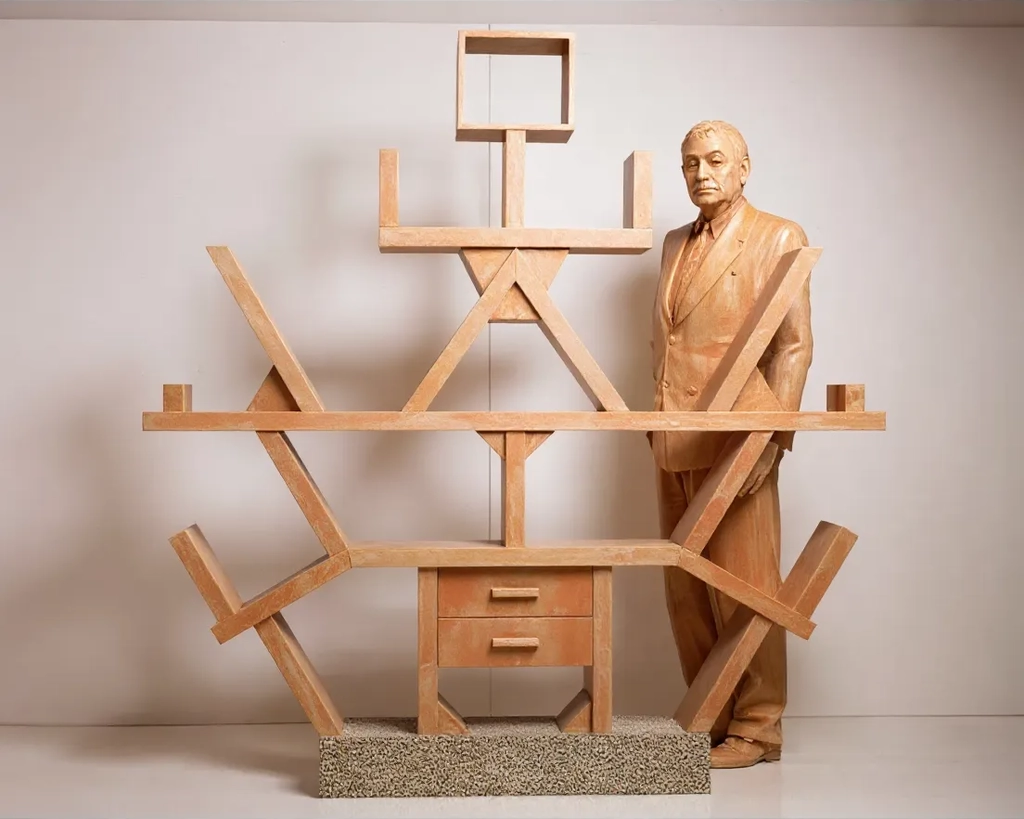
– bookcase in different views, Ettore Sottsass –
I appreciate you reading "Ettore Sottsass, the master behind the scenes" and feel free to contact me if you want to share your thoughts.
Grazie per aver letto "Ettore Sottsass, il maestro dietro le quinte", mi contatti pure se vuole condividere la sua opinione.